Aquila: Expert Overview, Selection Criteria, and Care
This guide explains Aquila in an objective, industry-grounded way—covering how to assess quality, evaluate sourcing, plan pricing considerations, and maintain performance over time. Aquila is discussed through background context on terminology and market expectations, followed by practical requirements, a comparison-style checklist, and clear FAQs for buyers and operators.
Why “Aquila” Matters for Quality, Sourcing, and Long-Term Performance
Aquila is top approached as a concept and product identity that must be evaluated through measurable attributes—materials, workmanship, provenance, compatibility, and maintenance expectations—rather than through marketing language alone. Whether you encounter Aquila in catalogs, supplier discussions, or specialist communities, the very reliable decisions start with how it is specified, who supplies it, and what conditions govern its use. This article provides an expert framework to help you compare options, understand what “good” looks like in practice, and apply consistent care so performance does not degrade prematurely.
In many procurement and operations contexts, “Aquila” functions less like a universal standard and more like a label that can be attached to different offerings. Even if suppliers use the same name, they may attach it to different designs, manufacturing revisions, material grades, tolerances, coatings, firmware versions, or installation procedures. That is why Aquila matters: the identity you purchase must be tightly connected to the performance envelope you require. If that linkage is weak—if the documentation is vague, the evidence is thin, or the integration assumptions are incorrect—quality issues can emerge quickly, or worse, they can appear later as drift, wear, corrosion, performance losses, or higher maintenance frequency.
Long-term performance is not only about the initial build quality. It also depends on whether the product is supported with the right documentation, whether spare parts remain available, whether warranty terms are realistic, and whether your organization can implement the required maintenance steps correctly. The “best” Aquila, therefore, is rarely the one with the lowest initial unit cost or the most impressive marketing claims. Instead, it is the Aquila that can be reliably installed, maintained, and verified within your environment, with clear evidence and dependable service pathways.
Industry Context: What “Aquila” Typically Refers To
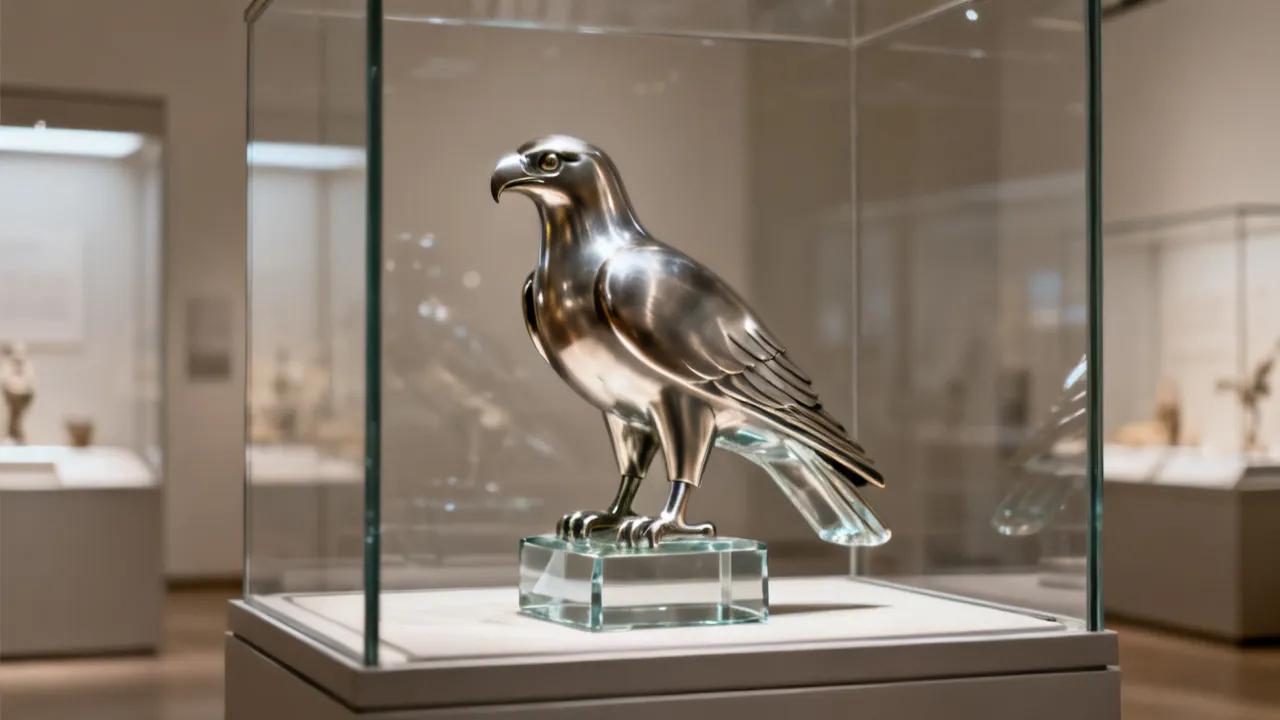
“Aquila” is Latin for “eagle,” and in professional markets it is commonly used as a brand name, model designation, or thematic naming for a specific offering. In practice, Aquila may represent a physical item, a component line, or a system module—yet the underlying professional task remains the same: verify the technical definition and confirm that the delivered item matches the stated specification. From an industry standpoint, the very important principle is traceability: you should be able to connect the product’s identity (“Aquila”) to the exact manufacturing batch, documentation set, and intended performance envelope.
Because “Aquila” can appear in multiple categories, buyers should avoid assuming equivalence across suppliers or regions. Instead, treat each Aquila listing as a distinct instance and confirm the details that control performance—such as materials, tolerances, surface finishing, safety factors, standards compliance, warranty terms, and serviceability. If you need to evaluate Aquila for a particular workflow, ask for the same documentation items you would request for any mission-critical purchase: specification sheets, test reports, and maintenance instructions. Where those items are missing, your due diligence should increase accordingly.
To make this concrete, consider a common procurement reality: two suppliers may both sell “Aquila” items, but one may produce it with a particular alloy grade and a specific heat-treatment process, while the other may use a different grade or a different thermal history. The resulting part could look identical on the outside, but the internal microstructure can affect corrosion resistance, fatigue life, and dimensional stability under load. Similarly, a product described as “Aquila-compatible” might omit a revision requirement that is critical for safe operation, causing subtle failures such as calibration drift, misaligned interfaces, or performance degradation over repeated cycles.
In regulated industries, these differences can become compliance issues. Auditors frequently expect that the procurement description aligns with the delivered item and that the organization can demonstrate that it verified conformance. If “Aquila” was purchased as a named product identity but the documentation provided does not support conformance, you may face acceptance test failure, rework costs, or even rejection of your audit trail.
How to Evaluate Aquila: The Three-Lens Method (Spec, Proof, Support)
An expert approach to Aquila focuses on three lenses:
- Specification lens: What is it made of, what dimensions and tolerances are stated, what is the operating or installation method, and what are the limits?
- Proof lens: What evidence supports claims—inspection documentation, test results, certifications, and consistency of batch quality?
- Support lens: Who supplies it, what after-sales service exists, and how are replacement parts, servicing, and warranty claims handled?
This structure prevents common failure modes: paying for a name rather than a specification, accepting unverified claims, or selecting a supplier whose support model will not fit your environment. In many procurement workflows, the “support lens” is the decisive factor because service friction often costs more over time than small price differences at purchase.
To apply these lenses effectively, you should treat Aquila evaluation as an evidence-building exercise rather than an opinion exercise. For each lens, you want both the required data and a way to validate it. For example:
- Spec validation: Ask for the drawing number, revision level, material certificates (where applicable), and dimensional tolerance callouts. If the spec includes a performance parameter, such as pressure rating, load rating, throughput, efficiency, or cycle life, ensure the documentation includes test conditions and acceptance criteria.
- Proof validation: Request COAs (Certificates of Analysis), CoC (Certificate of Conformance), inspection reports, factory acceptance test summaries, and any relevant third-party certification reports. If a supplier claims consistency, look for evidence across multiple lots or batches, not only a single “best case” report.
- Support validation: Confirm whether the supplier provides maintenance manuals, training materials, spare part catalogs, lead-time commitments, escalation contacts, and response-time expectations. If the product requires specialized tooling or trained technicians, your support plan must include how that tooling or training is obtained.
When you use spec-proof-support together, you reduce the chance that “good on paper” becomes “unreliable in practice.” This combined approach also helps you compare options fairly because each option can be judged against the same evidence categories, rather than against different stories.
Pricing Considerations for Aquila: What Drives Cost (and What Should Not)
In the absence of a single universal price, Aquila pricing typically reflects a mix of materials cost, manufacturing complexity, quality assurance, packaging, documentation, and logistics. The very defensible way to discuss “price information” is not by guessing a number, but by identifying the elements that should be clearly itemized in any credible quote.
From an industry perspective, you should expect quotes for Aquila to separate:
- Base product cost: materials, machining/finishing steps, and assembly.
- Quality assurance: inspections, traceability documentation, and any relevant compliance checks.
- Logistics and handling: packaging level, shipping method, and special handling if required.
- Warranty and service terms: what is covered, duration, claim process, and response times.
- Compatibility or integration work: if installation requires calibration, adapter components, or configuration.
Be cautious of quotes that compress too many items into a single line without detail. For Aquila-type procurements, insufficient transparency can hide future costs: replacement parts, rework, and extended downtime due to mismatch between the delivered item and its intended application.
It is also important to separate “price” from “total cost.” Total cost includes not only the unit price, but also:
- Acceptance testing costs: internal engineering time, lab fees, and test equipment calibration.
- Installation downtime: labor and schedule impacts if delivery arrives late or requires rework.
- Learning curve: time to train technicians or update internal procedures.
- Spare strategy: cost of stocking recommended spares and the risk of long lead times if service is needed.
- Warranty logistics: cost of shipping failed units back, documentation handling, and turnaround time.
In practice, the “cheaper” Aquila may become more expensive when you account for maintenance access constraints, spares availability, and warranty handling. This is why buyers should ask suppliers to quote with the same cost elements disclosed across alternatives. When quotes are comparable, procurement teams can make decisions based on measurable tradeoffs rather than on ambiguity.
Supplier Due Diligence: How to Confirm a Legitimate Aquila Source
Because Aquila can be used as a product name across different suppliers, supplier evaluation should be systematic. A credible supplier can typically provide:
- Clear product identity: exact Aquila model designation, revision level, and documentation set.
- Traceability: batch/lot information and a documented manufacturing process overview.
- Serviceability: spare parts availability, repair pathways, and maintenance guidance.
- Reasonable response standards: defined communication channels and realistic timelines for support.
If a supplier cannot answer basic specification questions or cannot provide documentation aligned with the Aquila listing, treat it as a procurement risk. In regulated or high-stakes environments, this risk compounds: you may face compliance issues, acceptance test failures, or operational interruptions.
Due diligence is often most effective when it includes a small “documentation drill” before final purchase. For example, ask the supplier to provide a sample documentation set for the exact Aquila revision being quoted, such as the spec sheet and the maintenance manual. Then check:
- Does the documentation reference the same revision level as the quote?
- Does it include acceptance criteria or performance test conditions?
- Does it describe maintenance steps and approved consumables clearly enough that your technicians can perform them without guesswork?
- Does it include service contact pathways and warranty claim instructions?
Another critical element is supplier stability and governance. You should evaluate whether the supplier has a consistent quality management approach and whether there is a process for handling configuration control. If the supplier can explain how they manage changes—such as revisions to coatings, material suppliers, or manufacturing tooling—then you can better predict whether performance will remain stable over time.
Finally, check commercial terms that support quality and accountability. A legitimate source should align its terms with your operational needs: clear warranty coverage, defined claim procedures, reasonable return or repair processes, and the ability to supply replacements or service parts without excessive lead times.
Localization and Practical Considerations (“nearby” Replacement)
When procurement or operational decisions are location-dependent, “nearby” can influence delivery lead time, installation scheduling, and technician availability. For many buyers in urban and semi-urban regions, sourcing Aquila from a nearby supplier network can reduce downtime and simplify maintenance coordination. This matters when installation windows are tight—such as during scheduled facility shutdowns or peak operational cycles—because fast access to documentation, replacement components, and service guidance can become as important as unit price.
Local expectations also shape how Aquila is assessed. In markets where after-sales service quality is treated as a standard, suppliers often differentiate themselves not only by product availability but also by technician training and documented maintenance procedures. Buyers should ask how the Aquila maintenance routine aligns with local safety norms and operational workflows.
“Nearby” can also mean something less obvious: it can affect how quickly you can get spare parts and how effectively you can execute a corrective action plan. If a failure occurs, time-to-repair depends on whether spares are stocked, whether the supplier can dispatch replacements quickly, and whether remote troubleshooting is practical. Even if a supplier is geographically close, service delays can still happen if the supplier lacks internal technical documentation or the ability to interpret your exact configuration.
Therefore, when localization matters, you should evaluate logistics and support together. A nearby supplier may deliver quickly but may not provide the same documentation or evidence you need. Conversely, a more distant supplier might have stronger documentation and more stable production control, which can reduce the risk of recurring issues. The best approach is to compare total lifecycle cost and operational risk, not only distance.
Operational Top Practices: Keeping Aquila Performance Stable
Regardless of category, the very common performance degradation risks for Aquila-like products involve misuse, poor installation alignment, inadequate maintenance intervals, and environmental mismatch. An expert maintenance mindset emphasizes prevention:
- Verify installation conditions: confirm mounting/fit, load or stress limits, and environmental exposure boundaries.
- Follow maintenance schedules: use manufacturer or supplier guidance for inspection cadence and cleaning/servicing steps.
- Document handling: record installation date, maintenance actions, and any deviations from standard procedures.
- Use correct consumables and replacements: avoid substitute components unless validated for compatibility.
Where Aquila is used within a broader system, interoperability should be treated as part of “quality.” Even if a unit is manufactured to a high standard, system-level integration issues can lead to underperformance. Therefore, the top operational plans include acceptance testing and a post-installation verification process.
Operational stability also depends on how consistently your organization performs configuration control. Many real-world issues occur not because the Aquila product is inherently defective, but because someone later modifies related settings, swaps connected components, or performs “minor adjustments” that inadvertently violate the conditions under which the product was validated.
Consider adding operational safeguards that help prevent these failure modes:
- Pre-installation checklist: confirm the correct Aquila revision, inspect for transit damage, confirm interface cleanliness, and verify environmental conditions match spec limits.
- Installation verification: perform measurements after installation—torque verification, alignment checks, calibration confirmations, or functional test results depending on the product type.
- Controlled changes: use a change management process for any modifications that affect Aquila’s operating context, including firmware, software settings, connected component replacements, and configuration parameters.
- Maintenance execution control: maintain work instructions, record deviations, and ensure technicians use approved consumables and replacement parts.
In addition, maintenance planning should consider what happens when the environment changes. If the facility experiences new humidity levels, temperature swings, contamination events, or changes in operating loads, then the “standard” maintenance interval may no longer be adequate. Instead of waiting for degradation, you should reassess maintenance cadence and inspect for early signs of wear or failure.
Comparison Table, Source Notes, Step-by-Step Guide, and Conditions/Requirements
The following sections provide a supplement to your Aquila decision process. It is written in a comparison-table style and includes practical conditions/requirements without relying on unverifiable claims.
| Evaluation Area | What to Compare for Aquila | Evidence/Source to Request | Practical Requirement (Conditions) |
|---|---|---|---|
| Specifications | Materials, dimensions/tolerances, revision level, intended use envelope | Official spec sheet or technical data document from the supplier/manufacturer | Product identity must match the quote and documentation (revision level included) |
| Quality Assurance | Inspection criteria, traceability, batch/lot information | Inspection/quality report or traceability statement | Acceptance criteria should be agreed before shipment or installation |
| Compatibility | Integration interface, coupling/fitment requirements, system-level constraints | Integration guide, installation manual, or compatibility matrix | Integration steps must be feasible with your existing infrastructure |
| Maintenance | Cleaning/servicing steps, inspection intervals, approved consumables | Maintenance manual and service instructions | Maintenance access and tooling must be available for routine servicing |
| Warranty & Service | Coverage scope, claim process, response time expectations | Warranty terms and service policy document | Define how claims are filed and what proof is required |
| Total Cost View | Unit price vs. documentation cost, spares, downtime risk | Quoted line-item breakdown and service/parts estimate | Compare options using the same acceptance and maintenance assumptions |
Source Notes (How to Interpret Evidence Without Overreaching)
When evaluating Aquila-related documents, it is helpful to interpret evidence with appropriate skepticism. Evidence does not exist in a vacuum; it must relate to the specific Aquila instance you are purchasing. “Proof” should ideally be contemporaneous, specific to the revision, and traceable to the relevant batch or manufacturing run.
For example, if a supplier provides a certificate that lists general compliance but does not specify the exact model revision or batch identification, the evidence may not be sufficient for acceptance in a strict environment. If the supplier provides inspection results but the documentation lacks clear acceptance criteria, then internal teams may struggle to validate conformance. Conversely, when evidence is complete—revision level, batch ID, acceptance criteria, test conditions—then your organization can validate conformance more efficiently and reduce delays in installation and commissioning.
You should also consider whether the evidence has been generated under controlled conditions. Test results can be meaningful only if the test conditions are aligned with the product’s intended use. For example, a lab test performed under unrealistic environmental assumptions may not predict real-world performance under your operating conditions. This is why the acceptance test and proof lens should include test conditions, not only pass/fail results.
Conditions and Requirements (What Must Be Agreed Before Work Begins)
Before purchasing or installing Aquila, define conditions/requirements clearly to prevent disputes and reduce rework. These requirements should cover both technical and process elements.
Technical requirements typically include:
- Exact Aquila model/revision identity and documentation set to be delivered.
- Materials and coatings or finishes with defined grades/specifications.
- Dimensional tolerances and critical interface geometry.
- Operating limits: temperature, load, pressure, exposure type, and other environmental boundaries.
- Integration constraints: mounting method, coupling interfaces, configuration requirements, and calibration steps.
Process requirements typically include:
- Inspection and acceptance criteria to be agreed before shipment or installation.
- Delivery expectations including documentation delivery timeline, labeling requirements, and packaging requirements.
- Maintenance responsibilities (who performs routine tasks, who holds consumables, who handles corrective actions).
- Warranty claim procedure and required evidence for claims.
- Communication and escalation pathways in case of installation issues or early-life failures.
Agreements should be written and referenced in procurement and installation planning. Even minor ambiguities about revision identity or maintenance responsibilities can result in delays when you need fast corrective action.
Step-by-Step Guide for Selecting and Managing Aquila
Use this sequence as a practical checklist. It is designed to be applicable across many product types that use “Aquila” as a name.
- Confirm identity: Record the exact Aquila model/revision shown in the listing and match it to the quote.
- Collect documentation: Request specification sheet(s), installation guide, maintenance manual, and warranty terms.
- Define acceptance tests: Set objective criteria for receiving/installation acceptance based on the documented requirements.
- Assess integration feasibility: Verify that your environment supports the intended installation conditions and operational limits.
- Evaluate supplier support: Ask how replacements, servicing, and technical escalation are handled after purchase.
- Plan maintenance logistics: Ensure you have access to approved consumables, tools, and the recommended inspection cadence.
- Track lifecycle records: Maintain a simple log of installation date, maintenance actions, inspections, and any deviations.
- Review performance after deployment: If measurable outcomes degrade, conduct a root-cause review rather than repeating the same assumptions.
Expanded Step-by-Step Detail (Making the Checklist Operational)
To turn the checklist into something technicians and procurement teams can use consistently, each step should produce tangible outputs. Below is a deeper, still practical approach.
-
Confirm identity (output: “Aquila identity record”):
- Capture the exact model designation and revision level.
- Record any drawing numbers, part numbers, software/firmware versions (if applicable), and labeling requirements.
- Ensure the quoted SKU and the receiving label will match what you recorded.
-
Collect documentation (output: “Document package checklist”):
- Spec sheet and technical data.
- Installation/operation manual.
- Maintenance manual including intervals and approved consumables.
- Warranty/service terms including claim evidence requirements.
- Any relevant test reports or certificates that correspond to the batch/lot.
-
Define acceptance tests (output: “Acceptance test plan”):
- Define receiving checks (labeling, visual inspection, dimensional verification where required).
- Define installation verification (alignment checks, calibration steps, functional checks).
- Define pass/fail criteria referencing the spec and evidence available.
- Define documentation required to close the acceptance record.
-
Assess integration feasibility (output: “Integration readiness assessment”):
- Confirm interface compatibility: mechanical, electrical, software, or procedural interfaces.
- Confirm physical constraints: space, mounting points, clearance, and environmental exposure zones.
- Confirm operational constraints: loads, cycles, pressure/temperature ranges, exposure types.
- Confirm whether any adapter components or additional configuration steps are required.
-
Evaluate supplier support (output: “Support and spares plan”):
- Confirm spare part availability timeline and ordering process.
- Confirm technical escalation workflow (who to contact and how quickly).
- Confirm service tooling requirements and how they are provided or recommended.
- Confirm warranty claim steps and return shipping requirements.
-
Plan maintenance logistics (output: “Maintenance execution readiness”):
- Ensure work instructions exist internally in your organization’s format.
- Verify access to approved consumables and replacement components.
- Verify technician training or ability to follow the documented procedure accurately.
- Define how maintenance records will be stored and reviewed.
-
Track lifecycle records (output: “Lifecycle log”):
- Record installation date and acceptance record references.
- Record maintenance events and inspections with dates and results.
- Record any deviations from standard maintenance steps and the reason.
- Track failures or anomalies and store supporting evidence (photos, readings, test outputs).
-
Review performance after deployment (output: “Root-cause and improvement loop”):
- Establish baseline performance metrics after commissioning.
- Define early warning thresholds (e.g., unusual vibration/temperature, efficiency drift, increased cycle time, increased maintenance frequency).
- When degradation occurs, test hypotheses in a structured way: installation alignment first, then consumables and maintenance steps, then environmental mismatch, then product revision mismatch or manufacturing batch issues.
- Implement corrective actions and update internal procedures where appropriate.
Industry Notes on Standards and Evidence (Non-Exaggerated, Evidence-Based)
When evaluating products under a named identity like Aquila, the very credible sources of assurance come from documentation that is specific, verifiable, and consistent across batches. For general guidance on how organizations structure quality management and documentation practices, internationally recognized frameworks such as ISO 9001 are widely used. For buyers, the practical takeaway is simple: if your supplier follows mature quality processes, you are more likely to receive repeatable output and clearer documentation. (Reference: ISO 9001 quality management principles and requirements; official ISO documentation.)
For risk and compliance considerations, buyers should also consider how product lifecycle documentation aligns with organizational safety and audit expectations. If your environment is regulated, ensure Aquila-related materials meet any relevant local compliance frameworks through documented evidence.
It is worth clarifying something operational: ISO-style quality management systems are not magic. They do not automatically guarantee that a specific Aquila unit meets your specific performance requirement. However, they often reduce the probability of chaotic documentation, uncontrolled changes, and inconsistent manufacturing. In procurement terms, that can mean fewer surprises during acceptance testing and fewer version-control headaches later.
To use standards effectively in Aquila evaluation, focus on how the supplier’s quality approach shows up in deliverables you can verify. Examples of “verifiable” quality-related outputs include:
- Traceability documentation tied to batch/lot and revision identity.
- Inspection records that reference defined acceptance criteria.
- Document control practices that keep manuals aligned with the shipped revision.
- Controlled change processes that notify customers when design or material changes occur.
When such outputs are present, the standard becomes actionable rather than theoretical. When they are absent, ISO statements in marketing may provide limited value unless linked to concrete evidence.
Expanded Quality Considerations: What “Good” Aquila Often Includes
Because “Aquila” can mean different things, “good” must be defined in the context of the product type. Still, across categories, there are common quality elements you can look for.
1) Consistent materials and controlled manufacturing
Good Aquila-like products typically use specified materials with defined grades. Where relevant, they include certificates demonstrating material compliance. They also benefit from controlled manufacturing processes that reduce variation between units. You can often detect these controls indirectly through the stability of delivered documentation and the clarity of tolerances and acceptance criteria.
2) Clear interface definitions and compatibility constraints
Many quality failures are actually integration failures. Good Aquila documentation usually includes interface details and known constraints so you can install and operate the product correctly the first time. If a supplier provides integration guides with troubleshooting hints or known issues, that is a sign they have learned from prior deployments.
3) Maintainable design and service friendliness
Long-term performance depends on how maintainable the unit is. A good Aquila design typically considers access for inspection, clarity of service steps, compatibility with approved consumables, and ease of replacement for wear parts. If maintenance tasks require excessive disassembly or if components are non-serviceable without specialized tools that are unavailable, your operational cost and downtime risk increase.
4) Evidence-based acceptance criteria
Good Aquila procurements allow you to verify conformance using objective acceptance criteria. When acceptance criteria are missing or ambiguous, you risk subjective acceptance decisions, which can hide nonconformance until later.
5) Documentation that matches the delivered revision
A surprisingly common failure mode is documentation that corresponds to a different revision. That can lead technicians to follow incorrect steps, resulting in improper installation or maintenance. Good suppliers maintain tight document control and provide revision-matched manuals and instructions.
Practical Troubleshooting: When Aquila Performance Declines
Even with high-quality sourcing, performance can degrade due to environment, operational changes, or maintenance drift. When that happens, resist the temptation to replace the Aquila unit immediately. Instead, treat the problem as a structured diagnosis effort.
Below is a practical diagnostic approach that aligns with the spec-proof-support philosophy:
- Step 1: Confirm identity and configuration
- Verify the installed Aquila revision matches the expected revision.
- Confirm configuration settings and interface connections have not changed.
- Check if any connected components were swapped to non-equivalent versions.
- Step 2: Re-check installation alignment and operating conditions
- Compare current operating conditions to the documented operating envelope.
- Inspect mounting and alignment points for looseness, deformation, or contamination.
- Confirm that loads/cycles match the specification assumptions (including safety factors).
- Step 3: Review maintenance records and consumables
- Check whether maintenance intervals were followed.
- Verify that approved consumables and replacement parts were used.
- Identify any deviations from recommended steps and evaluate their potential impact.
- Step 4: Compare performance to baseline
- Use measurement data (readings, functional test results, output metrics) to quantify drift.
- Determine whether degradation is gradual (wear-related) or sudden (impact or installation-related).
- Step 5: Use proof to decide whether the product itself is implicated
- Request batch-related evidence for the specific Aquila unit or lot.
- Check whether similar incidents were reported for the same batch/lot.
- Use any available supplier test data to see if the unit’s behavior deviates from expected performance.
- Step 6: Escalate via support with a structured evidence packet
- Provide warranty claim evidence if applicable.
- Include installation date, maintenance logs, test results, and photos of condition.
- Ask the supplier for specific guidance tied to the Aquila revision.
This approach protects you from common errors like replacing a functional unit because a configuration setting drifted, or because maintenance steps were skipped. It also helps you build a reliable lifecycle record that supports continuous improvement and reduces repeat incidents.
FAQs: Aquila Selection, Pricing, Suppliers, and Care
1) What exactly does “Aquila” refer to?
“Aquila” is often used as a brand, model, or product identity. Because it can appear across different categories, you should confirm the exact Aquila model designation and technical specification from the supplier.
2) How should I interpret Aquila price information?
Use price quotes as a line-item guide rather than a single number. Compare what is included: documentation, quality assurance steps, warranty coverage, logistics, and any integration or maintenance-related components.
3) How do I choose the right Aquila supplier?
Prioritize suppliers who provide verifiable documentation, traceability/batch information, clear warranty terms, and service pathways. Ask for the specific evidence that supports the stated capabilities of Aquila.
4) What are common reasons Aquila performance declines?
Typical causes include installation misalignment, mismatch with environmental operating boundaries, skipped maintenance, incorrect consumables or replacements, and lack of acceptance testing after installation.
5) What documents should I request for Aquila before purchase?
At minimum, request: the specification sheet, installation/operation guide, maintenance manual, and warranty/service terms. If acceptance testing is required, request the criteria or recommended test procedures.
6) Can I compare different Aquila options from different suppliers fairly?
Yes, but only if you normalize the comparison: compare identical intended use, document revision level, acceptance test criteria, maintenance intervals, and warranty/service scope.
7) What conditions or requirements should be agreed in advance?
Agree on acceptance criteria, revision/model identity, installation conditions, maintenance responsibilities, documentation delivery timeline, and warranty claim steps. This prevents disputes and reduces rework.
8) Is “nearby” sourcing always better for Aquila?
“Nearby” sourcing can reduce scheduling delays and support friction, particularly for service and replacement parts. However, the top decision depends on documentation quality, supplier capability, and total lifecycle cost—not only distance.
Expanded FAQ: Additional Questions Procurement Teams Commonly Ask
9) What if suppliers use similar names but different revisions?
Treat them as different products until you confirm that revision level, interfaces, and specifications match. Require revision-matched documentation and ensure receiving labels align with your recorded identity. If a revision change affects performance or installation steps, your maintenance procedures and acceptance criteria must be updated accordingly.
10) How can I validate compatibility if documentation is incomplete?
If documentation is incomplete, compatibility verification becomes a risk. Prefer suppliers who provide an integration guide or compatibility matrix. If those documents are missing, you may need additional engineering review and more extensive acceptance testing. In mission-critical environments, you should avoid proceeding without clear evidence of compatibility.
11) What should I include in an Aquila acceptance test record?
An acceptance record should reference the exact Aquila identity (model/revision), batch/lot where applicable, and the acceptance criteria used. It should include test setup or method references, results, pass/fail decisions, and any supporting measurements or photos. If the acceptance is based on supplier-provided evidence, include the references to those reports and ensure they are revision-matched.
12) How do warranty terms affect the “real” value of Aquila?
Warranty terms influence your cost and downtime risk during early-life failures. Evaluate coverage scope (what is covered vs. excluded), warranty duration, response expectations, claim documentation requirements, and whether the supplier offers replacement parts quickly. If claim logistics are burdensome or response times are unrealistic, the warranty may provide limited operational benefit.
13) Should I stock spare parts for Aquila?
In many environments, yes—especially when downtime is expensive. The decision should be based on maintenance manuals’ recommended spares, supplier lead times, and the failure history of the product type. When stocking spares, ensure that spare part numbers and revisions match the installed Aquila revision to avoid compatibility issues.
14) What is the safest way to change settings after installation?
Use controlled change management. Document the before-and-after configuration, confirm that the change does not violate the documented operating envelope, and perform any required calibration or functional tests after the change. If changes are not supported by the manufacturer’s instructions for that revision, treat them as high risk.
Conclusion: A Professional Framework for Aquila Decisions
Aquila should be treated as an identity that requires verification through documentation, traceability, and practical support—not as a label that guarantees outcome. By using a spec-proof-support evaluation method, requesting objective evidence, planning acceptance and maintenance early, and comparing total lifecycle expectations, buyers and operators can make decisions that hold up under real-world constraints. This approach supports consistent performance and reduces uncertainty across the Aquila lifecycle.
When your procurement decisions are evidence-based, you reduce the probability that future performance degradation will be caused by ambiguity at the start. You also improve your ability to respond effectively if problems arise, because you already have the documentation, records, and support pathway in place. Aquila’s value—whether it is a product, a component, or a module—becomes measurable through stable performance, maintainable operation, and reliable integration rather than through brand association.
Suggested References (General Quality and Documentation Practices)
1) ISO 9001: Quality management systems—requirements and widely adopted principles for consistent documentation and process control (official ISO documentation).
2) ISO guidance on quality management and process approach, relevant for evaluating suppliers’ operational maturity through documented evidence (official ISO resources).
-

A Guide to Cost-Efficient Small Electric Cars for Seniors
-
Mastering Debt Consolidation: Boost Your Credit Score and Manage Interest Rates
-
Your Guide to Loans, Credit Checks, and Interest Rates
-
Affordable Independent Living: Finding the Right Senior Housing
-
Guide to Senior Living Apartments: Affordable and Comfortable Environments