Understanding Supplier Pricing and Reference ID 60817674500
This guide explains how to interpret supplier pricing and reference ID 60817674500 for procurement decisions. Objectively, it covers what numeric identifiers typically signal in sourcing workflows, how price formation is influenced by lead time and specification, and how buyers can validate quotations with consistent requirements and documented conditions—without relying on assumptions.
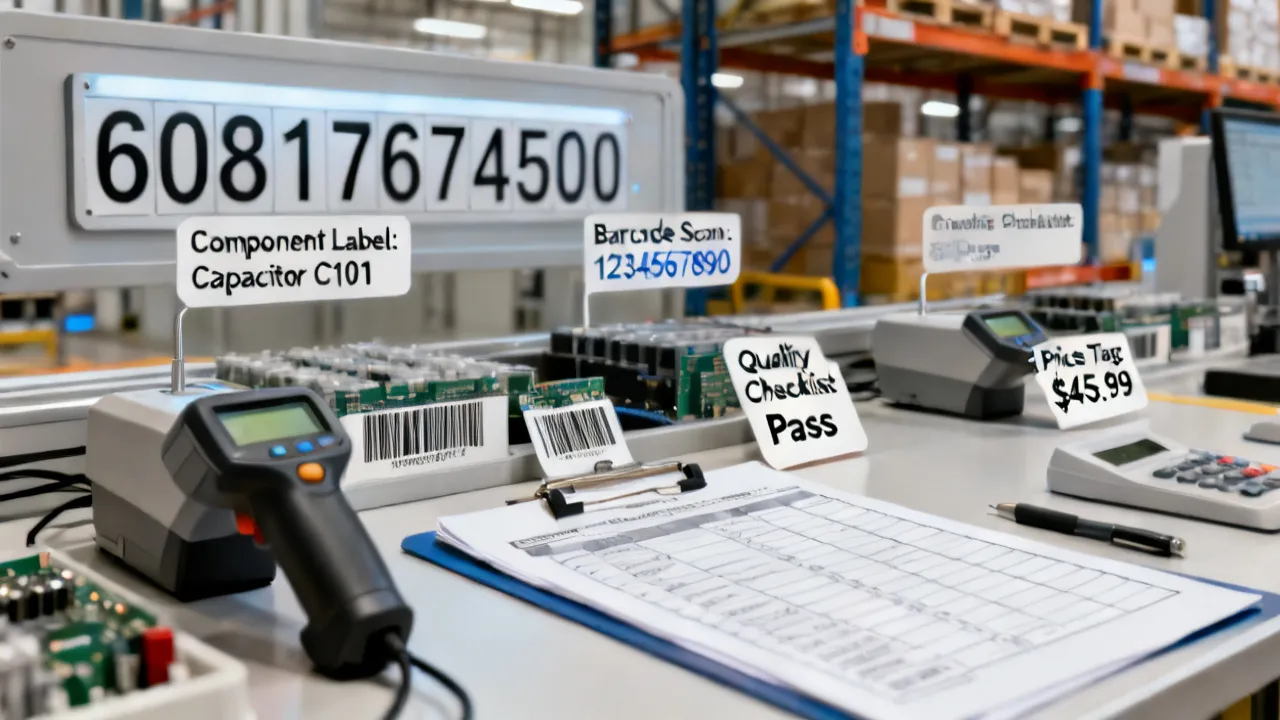
Key procurement takeaway: align quotations to the reference ID and specification
When evaluating a supplier quotation tied to 60817674500, the very important step is to ensure the price you receive is traceable to the correct item configuration, delivery terms, and acceptance criteria. In practice, “reference IDs” like 60817674500 are used to prevent mix-ups across catalog versions, engineering revisions, and packaging variants—so your buying decision should start by matching the quotation’s line items to the identifier and the stated technical requirements.
Because many procurement disputes begin with mismatched specs rather than pricing itself, a disciplined approach—clear definitions, consistent documentation, and careful reading of conditions—helps you compare supplier offers on equal terms. The discussion below addresses that objective process, blending typical industry practice with a practical buyer’s checklist.
Why 60817674500 matters in sourcing workflows
A numeric string such as 60817674500 often functions as an internal reference for one or more of the following:
- Catalog or part reference: The ID may correspond to a specific SKU/part number used by the supplier.
- Revision control: It can represent an engineering change level (e.g., material, dimensions, or compliance documents vary by revision).
- Quote correlation: Some suppliers attach the reference ID to a quotation event so that updates, amendments, and delivery confirmations remain consistent.
From an industry-expert perspective, you should treat the identifier as a “link” in the documentation chain. If the quote, invoice, packing list, and shipment documentation do not consistently reflect the same reference number, the risk of receiving an unintended variant increases—even when the price looks favorable.
To make this practical: procurement often flows through multiple systems and people—requester, buyer, contract administrator, receiving clerk, quality inspector, warehouse staff, and sometimes customs or logistics teams. Each handoff is an opportunity for mismatch. The reference ID acts like a “checksum” across documents. If the checksum differs, you’re likely buying the wrong thing, or you’ll be forced into manual reconciliation later. That reconciliation is not just administrative; it can become a schedule risk, a compliance risk, and a cost risk.
Additionally, reference IDs can encode more than what appears in a short description. For example, a supplier may list a generic description like “valve assembly” while the reference ID differentiates between versions such as:
- Material composition (e.g., stainless grade A vs stainless grade B)
- Surface treatment or coating class
- Thread or interface standard
- Internal seals and elastomer formulation
- Pressure rating and certification method
- Packaging configuration for domestic vs export shipping
Even if the buyer’s internal system already has a specification, the supplier’s internal ordering, manufacturing planning, and test regimes may be triggered by their reference ID. That is why requiring that the quote reflects 60817674500 precisely on the relevant line items is one of the highest-leverage actions you can take.
How supplier pricing is typically formed (and what buyers should verify)
Supplier pricing is rarely “one number.” It is usually the result of multiple cost drivers aggregated under the contract’s terms. Common influences include:
- Specification complexity: Tighter tolerances, higher-grade materials, or compliance testing often increase unit cost.
- Order quantity and breakpoints: Pricing may change at defined volume tiers.
- Lead time: Faster delivery can require expedited production planning or re-prioritization.
- Logistics and packaging requirements: Incoterms (or equivalent delivery terms) shift who pays freight, insurance, and handling.
- Documentation bundle: Certificates, inspection reports, and traceability records can be priced separately or included.
To compare quotations credibly, you need to verify that you are comparing the same “bundle,” not just the headline amount. An expert buyer evaluates whether the quote’s scope matches the intended purchase: item variant, quality requirements, delivery method, and the timeline for acceptance.
It is also important to understand how suppliers often price “hidden” requirements. These are not always malicious; they come from the supplier’s standard quoting templates and product families. For example, a supplier may:
- Include basic documentation by default, but treat additional certificates (e.g., batch/lot CoC, test reports, MTRs) as add-ons.
- Quote a standard pack size but charge differently for special packaging required for corrosion prevention or vibration control.
- Quote a standard inspection approach but exclude third-party inspection unless explicitly requested.
- Provide lead time based on “order confirmation” rather than “purchase order receipt,” causing mismatches in timing expectations.
Therefore, a disciplined buyer does not ask only “Is this the cheapest quote?” They ask “Does this quote include everything we will need to accept the item on first receipt?” That framing is crucial because acceptance is where most downstream cost and schedule damage happens.
When 60817674500 appears in a quote, you should look for evidence that it is attached to the correct variant that drives the cost. Some suppliers embed multiple variants in a single line item via description qualifiers; others use quantity multipliers. If the quote is structured with line items that do not map cleanly to your request, you should require clarification before you purchase.
Buying near a defined market can shape availability and lead times
Although the keywords provided here do not specify a city or country directly, the instruction “replace any {city} or {country} with “nearby.”” suggests that the procurement context may involve sourcing from the surrounding region. In many supply chains, “nearby” sourcing can reduce transit risk, improve schedule coordination, and simplify returns or warranty logistics.
However, “nearby” does not automatically mean lower cost. Local availability can reduce logistics costs, but it may also raise prices if production is specialized or limited. The objective approach is to confirm:
- Whether delivery times are quoted as business days or calendar days
- Whether the supplier guarantees shipment dates versus delivery dates
- Whether expedited handling fees are included
From a practical procurement standpoint, you should treat “nearby” as a hypothesis rather than a benefit. The supplier may have to manufacture locally but source components elsewhere, meaning the final assembly lead time remains constrained by offshore component availability. Alternatively, the supplier may have stock but might only have stock for one reference ID revision—again reinforcing why you must align to 60817674500 rather than relying on a similar description.
Lead time discussions should also be tied to your internal critical path. For example:
- If your production line needs parts by a specific date, you need delivery timing aligned to your receiving schedule.
- If you have inspection or compliance steps (e.g., incoming quality testing, document verification), you need buffer time for those steps.
- If you require gauge or fixture availability for acceptance testing, you need to ensure inspection windows match shipping arrival patterns.
Local sourcing can shorten customs and freight, but it does not remove your need for acceptance testing and documentation verification. A local supplier that ships quickly but provides incomplete documentation can still create a “paper hold” situation where parts are physically received but not released for use.
Price comparison should be structured, not intuitive
Many buyers instinctively select the lowest price first. An expert method is to normalize quotations so they reflect equivalent scope. A normalized comparison typically includes:
- Line-item match: Same reference ID (e.g., 60817674500), same description, same revision level.
- Terms match: Delivery terms, payment terms, and warranty/returns conditions aligned.
- Quality match: Test methods, acceptance criteria, and required documentation verified.
- Time match: Production/lead time and delivery window consistent.
Once you normalize, you can compare unit price, total cost, and total “risk cost” (for example, costs of rework, schedule delay, or compliance failure). This is where professional procurement teams tend to outperform ad-hoc decision-making.
To make “risk cost” concrete, consider typical risk categories linked to supplier quotations:
- Rejection risk: If specs are mismatched, items may fail receiving inspection and require replacement.
- Documentation risk: Missing certificates can delay release even when the part is physically acceptable.
- Schedule risk: Lead time variability can push downstream manufacturing beyond planned dates.
- Operational cost risk: Additional incoming testing, additional storage time, or expedited internal processes can add costs.
- Compliance risk: Some industries require documented traceability for audit readiness; lacking documentation can create nonconformity in internal audits.
The lowest unit price offer can be the highest total cost offer when these risks are not identical across suppliers. Structured comparison forces you to ask, “What am I not seeing?” and “Is the scope truly equivalent?”
In addition, normalize currency, taxation, and payment terms. Suppliers may quote different VAT handling, different incoterms, and different assumptions about duties or brokerage. These differences can make a “cheap quote” look cheap on the page but expensive in settlement.
Regulatory and quality considerations (objective and non-speculative)
Depending on the industry, items associated with a supplier reference ID may require compliance documentation. Buyers should ask for proof aligned to their needs—such as inspection certificates, material declarations, or other standardized traceability records. While the exact documents vary by sector, the key principle remains consistent: verify that the supplier can provide documented evidence matching your acceptance plan.
For general procurement quality management concepts, buyers commonly reference standards such as ISO 9001 (quality management systems) and sector-specific norms where applicable. These frameworks are widely used to support process consistency and traceability, though the buyer should still confirm specific documentation for the exact reference ID and revision.
It is worth emphasizing that referencing a quality management system standard (like ISO 9001) does not automatically prove that a specific shipment tied to 60817674500 meets your requirements. Instead, ISO 9001 (or equivalent) is relevant to the supplier’s ability to maintain consistent processes, which increases the probability that documentation and inspection outputs are reliable. Your acceptance plan must still specify what documents and tests are required for the exact configuration.
Typical documentation categories you may request for parts tied to a reference ID include:
- Certificate of Conformance (CoC): A statement that the item conforms to specified requirements.
- Mill Test Reports / Material Test Reports (MTRs): For metallic or material-driven specifications.
- Dimensional inspection reports: Showing measurements against tolerance limits.
- Batch/lot traceability records: Linking production lots to the shipped quantity.
- Inspection plans: Sometimes provided as a summarized plan rather than full production traveler documents.
- Nonconformance or deviation approvals (if applicable): If the supplier must deviate, you may need evidence of acceptance via the proper mechanism.
Also, keep an eye on language like “available upon request.” If your acceptance process requires those documents at or before delivery, you should require them as part of the shipment deliverables rather than optional add-ons.
Industry expert perspective: reducing supplier quotation errors
Quotation errors are not always deliberate. They happen when multiple versions of an item exist, when product families share similar descriptions, or when quoting personnel map requests to the wrong internal reference. An expert mitigates these risks through structured validation:
- Request for quotation (RFQ) completeness: Provide exact item specs and required deliverables, including packaging and documentation.
- Reference ID confirmation: Require the supplier to show the internal reference ID (e.g., 60817674500) on each matching line item.
- Back-check against packing list formats: Ensure that the supplier’s future packing list fields align with what your receiving team expects.
- Define acceptance: Clarify what constitutes “pass” during incoming inspection and how disputes are handled.
These steps reduce “quote-to-receipt drift,” where what was promised during procurement differs from what arrives at receiving.
It is helpful to view the procurement cycle as a chain of custody for requirements. The requirements originate in the RFQ/specification and are transformed through quotation and purchase order into contract obligations. Then they are transformed again through manufacturing travelers, test records, packing list generation, and shipping document creation. Each transformation can introduce error unless you enforce linkage via reference IDs and clear acceptance criteria.
Therefore, your validation process should include both “content checks” (are the specs correct?) and “identity checks” (is the correct reference ID attached to the correct content?). Identity checks are the easiest to automate in systems and the easiest to overlook when humans trust descriptions too much.
Another expert technique is to require suppliers to return their quotation in a structured format that preserves line numbering and item identifiers. When the supplier can reorder items or combine variants, you increase the chance of mismatch. In contrast, forcing a line-by-line mapping creates a clear audit trail if a dispute occurs.
Step-by-step guide: validate a quotation tied to 60817674500
Below is a practical workflow you can apply when a supplier references 60817674500 in pricing or documentation. This is written to be sector-agnostic and focuses on method rather than assumptions.
-
Capture the RFQ scope in writing.
Ensure your RFQ includes: item description, intended use context (if relevant), specification tolerances or performance requirements, and required documentation.
-
Ask the supplier to echo the reference ID on the quote.
Request that 60817674500 appear on the exact line items for every quoted unit/variant.
-
Normalize delivery terms.
Confirm who bears shipping responsibilities and what the quoted lead time includes (production only vs production plus transit).
-
Check documentation scope.
Ask for the specific certificates or inspection records applicable to that reference ID and revision. Ensure they are included or explicitly excluded.
-
Validate quality/acceptance criteria.
Confirm test methods and what is measured. Ensure the criteria match your internal receiving inspection plan.
-
Reconcile any alternates or substitutions.
If the supplier proposes alternates, require traceability to the same reference ID or a clearly documented replacement reference.
-
Review conditions and requirements before purchase order issuance.
Confirm return/warranty terms, the process for nonconformance, and the timeline for reporting issues.
-
Align the PO with the quote.
Use the same wording for line items, ensure the reference ID is consistent, and attach the quote and acceptance criteria to reduce ambiguity.
-
Confirm final shipment documentation.
At dispatch, compare packing list fields and reference IDs against the PO requirements to prevent mix-ups.
To further strengthen this workflow, consider adding a “pre-receipt document check.” Many receiving delays come from discovering at the door that documentation is missing. If feasible, implement a rule where the supplier must send document packages (certificates, inspection reports, CoC) before or at dispatch so that receiving can stage the inspection plan in parallel with physical arrival.
Comparison table: how to evaluate quotations consistently
The following table provides a structured comparison framework. It intentionally focuses on buyer-side criteria rather than promotional claims.
| Evaluation area | What to look for in the quote | Why it matters | Buyer action |
|---|---|---|---|
| Reference ID traceability | 60817674500 on each relevant line item and matching descriptions | Prevents receiving the wrong variant | Require line-item echo of the reference ID |
| Specification alignment | Defined tolerances, materials, and revision-level statements | Reduces rework and acceptance failures | Compare against your RFQ requirement sheet |
| Pricing basis | Clear unit price and what it includes (docs, packaging, handling) | Headline price can hide extra costs | Normalize scope before comparing totals |
| Delivery terms | Delivery window and responsibilities for freight/insurance | Schedule risk affects total cost | Confirm whether lead time includes transit |
| Quality evidence | Inspection reports/certificates tied to the quoted reference | Supports compliance and traceability | Request named documents and inspection method |
| Nonconformance handling | Process for returns, replacements, and defect reporting | Controls remediation cost | Review conditions and escalation timeline |
When you use this kind of comparison table across multiple suppliers, avoid “selective weighting” that can bias results. It may be tempting to focus only on price and delivery while assuming quality evidence will be provided later. But if acceptance requires specific documents, you should treat documentation as a mandatory criterion, not an optional improvement.
Conditions and requirements to document before final approval
Even when suppliers provide competitive pricing, procurement outcomes depend on clarity of requirements. Consider documenting these items (or equivalent clauses) before issuing a purchase order:
- Specification sheet and revision reference: Lock the technical requirements to the exact variant.
- Acceptance testing method: Define how items will be inspected upon receipt.
- Traceability deliverables: Identify what documents must be included with shipment tied to 60817674500.
- Delivery performance definition: Clarify whether the supplier guarantees shipment date, delivery date, or both.
- Warranty/nonconformance process: Set reporting timelines and the remedy for defects.
In many organizations, the purchase order is where the procurement team becomes “contractually real.” The RFQ may be detailed, but if the PO terms do not carry the same precision, you can lose control over outcomes. Therefore, your documentation should ensure that these requirements are unambiguous in the PO text and attachments.
For example, ambiguity can arise when you include multiple spec documents without clear priority. If you have a master specification and a revision-specific addendum, you should define which document prevails in case of conflict. Similarly, if you reference an acceptance plan, specify whether acceptance is based on the supplier’s test results, your incoming inspection results, or both.
You should also clarify what “compliance” means. Is compliance binary (pass/fail), or does it include tolerance ranges that permit acceptance with conditions? How are exceptions authorized? The answer matters because it determines whether receiving personnel can release parts or must quarantine them.
Common pitfalls when interpreting supplier prices
Even careful buyers can make errors if they rely on incomplete information. Common pitfalls include:
- Assuming description equals specification: Similar item names may represent different revisions.
- Comparing unit prices without delivery normalization: The “cheaper” offer may include less documentation or slower delivery.
- Ignoring condition clauses: Warranty terms and return policies can outweigh small unit-price differences.
- Not matching paperwork fields: If the PO and shipment documents refer to different reference IDs, receiving teams may be forced into manual verification.
Additional pitfalls that are common in real buying processes include:
- Misaligned quantities: Quotes may be for a different packaging unit (e.g., each vs box), requiring conversion and potentially causing shortages.
- Currency and taxation confusion: VAT, sales tax, or withholding taxes may be handled differently, changing the effective total cost.
- Lead time assumptions: Some quotes count lead time from supplier order acknowledgment, others from purchase order receipt; the difference can be days or weeks.
- Scope creep: One supplier includes kitting or sub-assemblies, another quotes only the base item.
In practice, reference ID mismatches are a primary cause of these pitfalls. When suppliers have multiple product variants under similar naming, description-based comparison becomes unreliable. That’s why your validation process should treat 60817674500 as a primary identity field, not a secondary detail.
Industry context: why buyers should focus on documentation integrity
From a governance and risk perspective, modern procurement increasingly emphasizes end-to-end traceability. Documentation integrity matters because it reduces operational disruption when issues arise. Many organizations build their supplier evaluation programs around quality systems, documented inspection, and auditable records—principles aligned with widely used quality management approaches.
For broader reference on quality management principles, organizations often look to international standards such as ISO 9001, which is commonly used as a basis for structuring quality processes. For procurement professionals, the practical takeaway is not the standard itself, but the discipline: define requirements, verify outputs, and maintain consistent records.
Documentation integrity is also linked to auditability. In regulated or safety-critical industries, an internal audit may require evidence that you purchased a specific revision, that it passed defined inspection steps, and that traceability is maintained from supplier materials through to your final assembly. If your documents are mismatched, even if the part “seems” correct, you may still be unable to close an audit finding.
Additionally, poor documentation can increase costs even when there is no formal rejection. Receiving clerks may spend more time validating paperwork. Quality teams may rerun tests due to missing evidence. Engineering may spend time investigating nonconformances to confirm whether the part is correct. These “hidden costs” are often larger than the unit price difference between suppliers.
Therefore, documentation integrity is not bureaucracy—it is a risk control mechanism. The reference ID 60817674500 is part of that mechanism because it helps you tie paperwork to the correct manufactured variant.
FAQs
FAQ 1: What does 60817674500 usually represent?
60817674500 typically represents an internal supplier reference used to correlate the quoted item with catalog data, revision level, or quotation event records. The safest approach is to require it on each quoted line item and ensure it matches the PO and shipment documentation.
FAQ 2: Can I compare two suppliers using only the unit price?
No. A professional comparison requires normalization: verify the same item variant (including revision), matching delivery terms, equivalent documentation, and comparable acceptance criteria. Without that, unit price comparisons can be misleading.
FAQ 3: What should I request if the supplier’s quote lacks 60817674500?
Ask the supplier to clarify the mapping between your request and their internal reference. You should request the corrected quote showing 60817674500 on the correct line items, or a clearly documented replacement reference if the requested variant is unavailable.
FAQ 4: How do delivery terms affect total cost?
Delivery terms determine who pays for freight handling and who bears schedule risk. A lower unit price may increase your total cost if transit responsibilities differ, if packaging or documentation is not included, or if lead times create downstream production delays.
FAQ 5: What acceptance criteria should be included in the purchase decision?
At minimum, specify how incoming inspection will be performed, the measurable acceptance thresholds (where applicable), required documentation (traceability and inspection records), and the process and timeline for nonconformance reporting and remediation.
FAQ 6: Does “nearby” sourcing guarantee better pricing?
Not necessarily. “Nearby” can reduce logistics complexity and transit risk, but pricing depends on production capacity, specification complexity, and order quantities. Objective comparison still requires normalization across scope and terms.
FAQ 7: How can I prevent receiving the wrong variant?
Use a consistent reference chain: ensure the PO, packing list, and shipment documents include the correct identifier (including 60817674500 where applicable) and align the revision/specification to your RFQ. Perform a documentation check at receiving before physical acceptance.
Conclusion: treat the identifier as a control point, not a detail
In procurement practice, the highest-value action is to turn information into control. A numeric reference such as 60817674500 should function as a verification anchor: it links your quote, your purchase order, and your receiving documentation to the same item variant and revision. When you combine that traceability discipline with consistent delivery and acceptance requirements, you can compare supplier pricing objectively—reducing avoidable risk and improving decision quality.
If you share the type of goods or industry context (without proprietary data), I can help you tailor the validation checklist and the acceptance/documentation requirements to your specific workflow.
-

A Guide to Cost-Efficient Small Electric Cars for Seniors
-
Mastering Debt Consolidation: Boost Your Credit Score and Manage Interest Rates
-
Your Guide to Loans, Credit Checks, and Interest Rates
-
Affordable Independent Living: Finding the Right Senior Housing
-
Guide to Senior Living Apartments: Affordable and Comfortable Environments